INTRODUCTION:
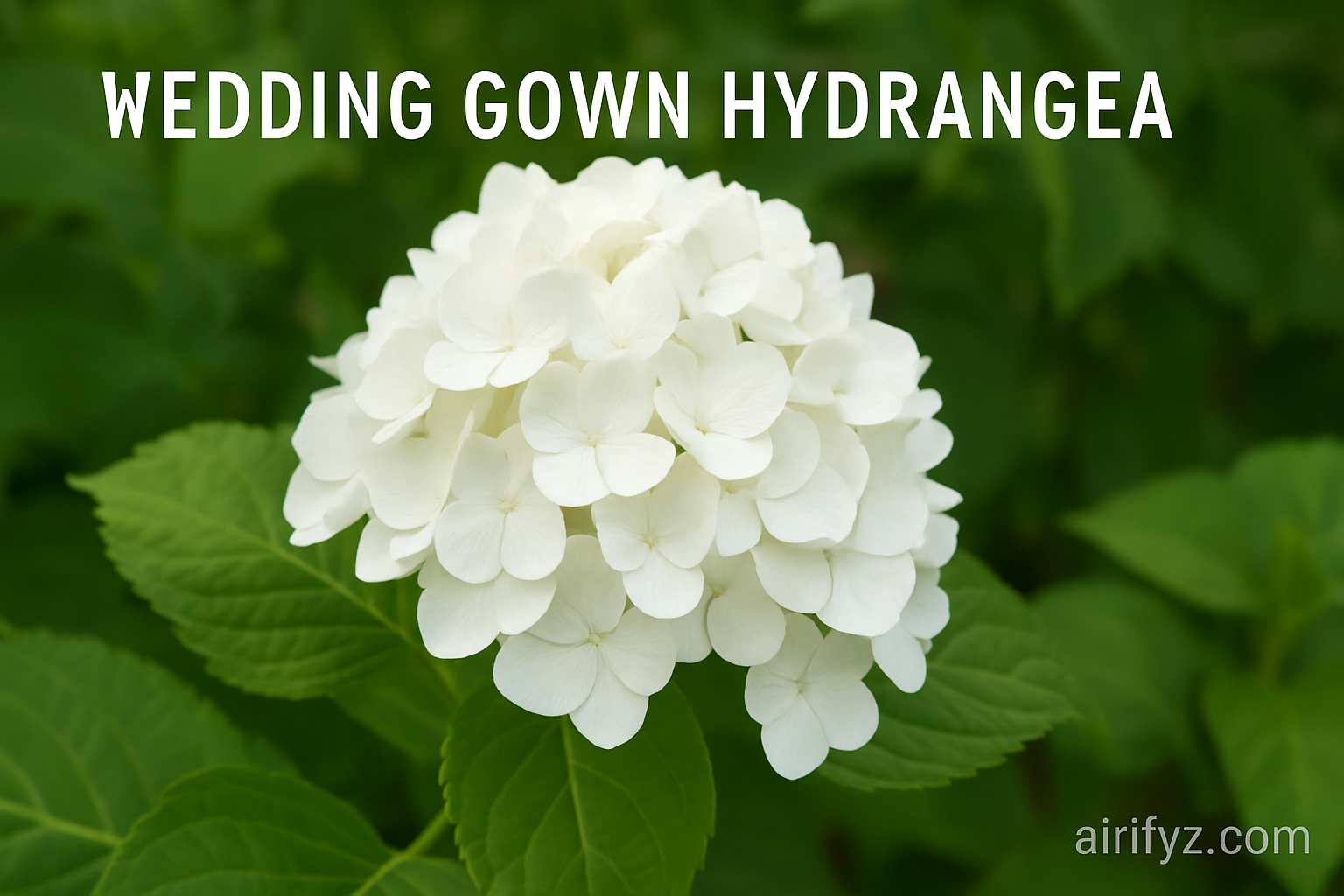
If you love lush, bridal-white pom-pom edges wrapped around a lacecap center, this post is for you. The Wedding Gown Hydrangea is a small, stunning plant that gives you beautiful blooms again and again when you care for it well and regularly. Below, you’ll find seven field-tested hacks, a seasonal care plan, troubleshooting fixes, and answers to common questions—so you can grow more flowers with less guesswork.
Quick promise: follow these hacks and you’ll help your plant convert light, water, and nutrients into buds instead of extra leaves—exactly what you want when bloom power is the goal.
What Makes “Wedding Gown Hydrangea” Special
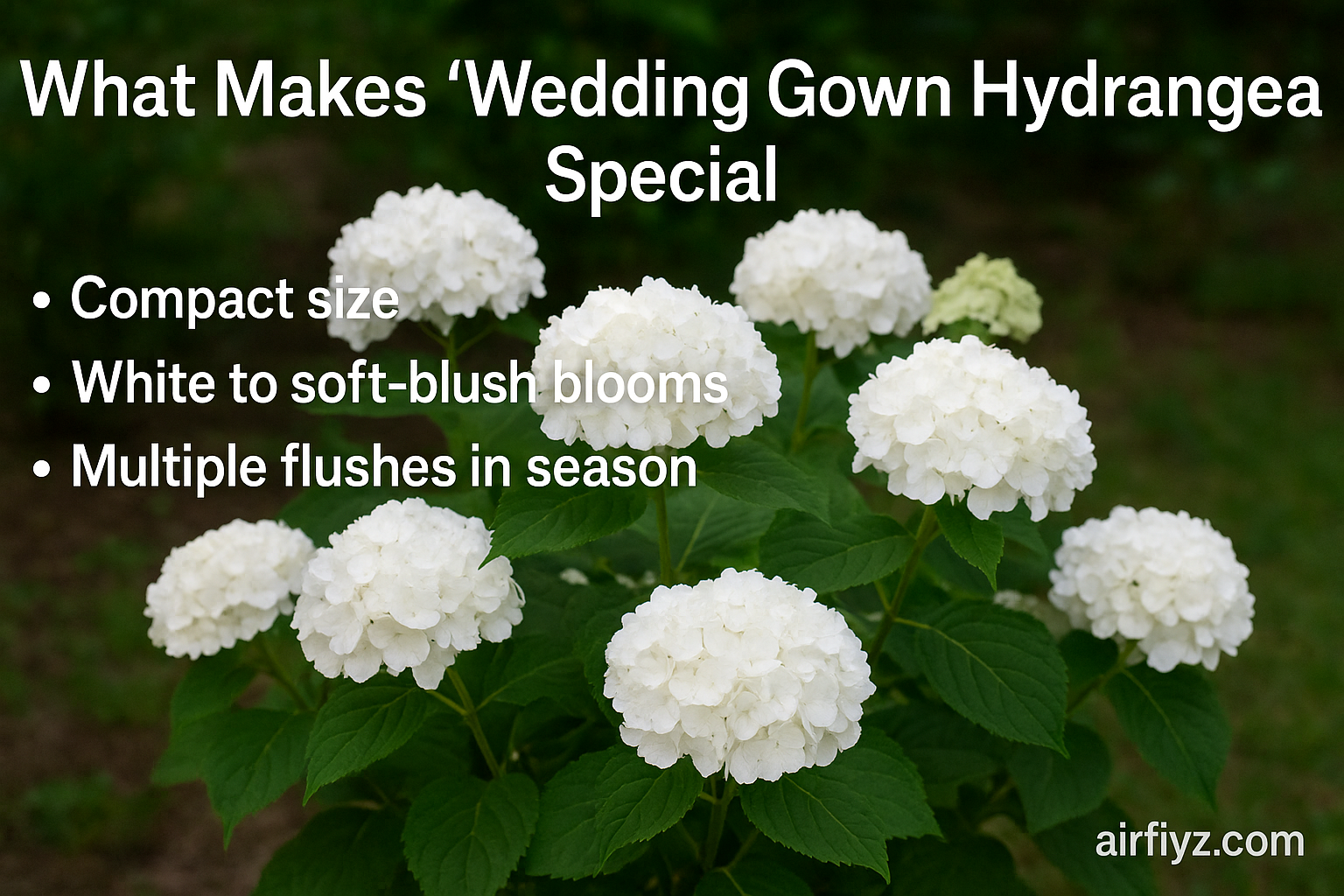
This double-flowered lacecap (bigleaf type) is bred for elegance and reliability. Expect:
-
Compact size: ideal for courtyards, patios, and small beds
-
White to soft-blush blooms: typically remain white; edges may blush with age or strong sun
-
Multiple flushes in season: with good care and correct pruning timing
Tiny anecdote: When I trialed this variety in a narrow, bright-but-sheltered courtyard, the first-year plant produced a light spring show. In year two—after I changed the watering cadence, added mulch, and pruned right after the first flush—the shrub doubled its bloom count. The difference came from timing and consistency, not fancier fertilizer.
How we’ll approach this guide
-
Begin with choosing the right spot and preparing the soil—they handle most of the work for you.
-
Dial in water and nutrients so energy funnels into buds, not just foliage.
-
Prune with purpose to protect next season’s flowers.
-
Use small climate hacks to protect your plants from heat, wind, and cold.
-
Follow a seasonal calendar to keep everything on track.
Hack 1: Put It Where Morning Sun Acts Like a Bloom Switch
Light is your throttle. Aim for:
-
Morning sun + afternoon shade or filtered light all day
-
Bright shade in hot climates (especially where summers are long and dry)
-
Keep your plant out of the strong midday sun, which can burn petals and damage leaves.
Container tip: If your bed gets too much midday sun, grow it in a pot and move it with the seasons. Mobility is a superpower—especially on balconies or patios.
Why this works: Soft morning sunlight starts photosynthesis while keeping the buds from getting too hot. Afternoon shade helps keep the petals perfect and prevents the plant from losing too much water.
Hack 2: Build a Loose, Moisture-Holding, Free-Draining Soil
Hydrangeas love oxygen at the root zone and steady moisture. Create a mix that holds water but doesn’t stay soggy.
Bed recipe (per square meter)
-
1 bucket compost or well-rotted leaf mold
-
Add 1 bucket of pine bark fines or coco coir to give the soil good structure and drainage.
-
A few handfuls of perlite or grit if your soil is sticky
Ideal pH: Keep the soil slightly acidic to neutral, around 6.0–6.5.. White varieties rarely shift blue/pink with pH, but good pH keeps nutrients like iron bioavailable so leaves stay green and the plant has energy for flowers.
Mulch like you mean it: 5–8 cm of shredded bark or leaf mold. Mulch keeps roots cool, reduces evaporation, and supports beneficial microbes that help with nutrient uptake.
Hack 3: Water Deeply, Not Daily
Fast sips train shallow roots; deep drinks build resilience and blooms.
Cadence
-
In mild weather: once or twice per week, soaking the root zone
-
In heat waves: two to three times per week, checking soil 5–8 cm down
-
After planting: keep evenly moist for the first 6–8 weeks
Goal: About 2.5–3.5 cm (1–1.5 inches) of water per week from rain + irrigation.
How to know you’re right
-
Leaves perk up each morning and don’t flag by noon
-
Top few centimeters dry between waterings, but the deeper soil stays cool and slightly damp
-
No swampy smell or blackened stems (overwatering red flags)
Upgrade: A simple drip line on a timer delivers consistent moisture without wetting blooms and foliage.
Grower mantra: “Water deeply, not daily; prune with a purpose; mulch like you mean it.”
Hack 4: Feed for Buds, Not Just Leaves
Too much nitrogen = glossy leaves, few flowers. Your aim is balanced nutrition, modestly applied.
Simple feeding plan
-
In early spring, apply a slow-release balanced fertilizer at half the recommended amount.
-
In late spring, after the first blooms start to appear, give a light fertilizer boost if the leaves look pale.
-
Mid to late summer: stop feeding so new growth hardens before cold
What to avoid
-
Repeated high-nitrogen lawn fertilizers nearby
-
Heavy late-season feeding that pushes soft growth and bud loss
Compost counts: A thin spring layer of compost under the mulch steadily supplies trace nutrients without force-feeding.
Hack 5: Prune at the Right Time to Protect Flowers
This is the make-or-break habit. Many bigleaf types set flower buds on last season’s stems. Some can also push on new wood in warm, long seasons—but assume you must protect buds formed the previous year.
Best-practice pruning
-
Right after the first bloom flush fades, remove only spent heads down to the first strong pair of leaves
-
Late winter: tidy up dead, crossing, or winter-damaged wood only
-
Every few years, renewal prune 1–3 of the oldest canes at the base to keep vigor high
Common mistake: Hard pruning in late winter removes the very buds you were counting on. When in doubt, prune less and earlier.
Hack 6: Use Microclimate Tricks to Beat Heat, Wind, and Cold
Think beyond soil and sun—small environmental tweaks unlock big bloom gains.
-
Heat relief: 30–40% shade cloth for two months of peak heat
-
Wind shield: plant near a fence, hedge, or trellis to prevent bud desiccation
-
Cold cushion (chilly winters): mulch the root zone, wrap with burlap if deep cold threatens
-
Containers: in heat-prone regions, use light-colored pots to reflect sun and keep roots cooler
Hack 7: Run a Simple Seasonal Care Calendar
Late winter
-
Inspect for winter dieback and remove only dead wood
-
Refresh mulch to 5–8 cm
Early spring
-
Feed lightly; check irrigation; top up compost
-
Watch for new shoots and protect from late frost with a breathable cover
Late spring to early summer
-
Maintain deep watering; deadhead lightly as blooms fade
-
Stake any wind-rocked stems
Mid to late summer
-
Keep soil evenly moist; pause feeding
-
Add temporary shade if petals scorch
Autumn
-
Allow growth to harden; let spent blooms add winter interest
-
Clean up leaves around the base to reduce disease carryover

Troubleshooting: Why Wedding Gown Hydrangea Isn’t Flowering?
-
Wrong pruning time: Buds removed in late winter or early spring
-
Too much shade: Luxurious leaves, minimal blooms—add morning sun
-
Excess nitrogen: Cut back on lawn fertilizers nearby
-
Drought or heat stress: If the plant wilts repeatedly, buds may drop—water deeply and add mulch to protect it.
-
Winter bud damage: Protect in colder zones; site near a wall or hedge for warmth
Real-World Setups That Work
Balcony grower
-
40–50 cm container with bark-rich potting mix
-
Morning sun till 11 a.m., afternoon dapple
-
Drip spike on a small timer, 10–15 minutes every other day in heat
Hot-summer courtyard
-
Bed amended with compost + bark fines, 8 cm mulch
-
Shade cloth stretched during the hottest eight weeks
-
Two deep irrigations per week, adjusted after rain
Cool-coastal garden
-
More morning sun is fine; watch wind exposure
-
Fertilize very lightly—cool soils mineralize slowly but steadily
Research-Backed Principles (In Plain English)
-
Root-zone oxygen + consistent moisture drive healthy growth; alternating drought and flood reduces bud set.
-
Mulch lowers soil temperature and evaporation, which helps maintain turgor pressure in leaves and developing buds.
-
Moderate fertility aligns with flowering shrubs’ biology: blooms form best when plants are not pushed into endless leafy growth.
-
Bud protection is conservation of resources: last year’s stems often carry this year’s flower potential, so timing beats intensity.
You don’t need a lab to apply these; you need habits: check soil with your finger, water deeply, prune early after blooming, and keep roots cool.
Expert Voices & Counterpoints
-
Light debate: Some growers advocate more sun for denser blooms. That can work in mild climates. In hot interiors, extra sun often means wilted petals—morning sun plus afternoon protection is the safer universal baseline.
-
Fertilizer philosophy: A few gardeners swear by bloom boosters. They can help in lean soils, but balanced, light feeding plus compost typically produces sturdier plants with fewer problems.
-
Pruning styles: Minimalists prune only dead wood; stylists shape right after the first flush. Both approaches succeed when buds are respected.
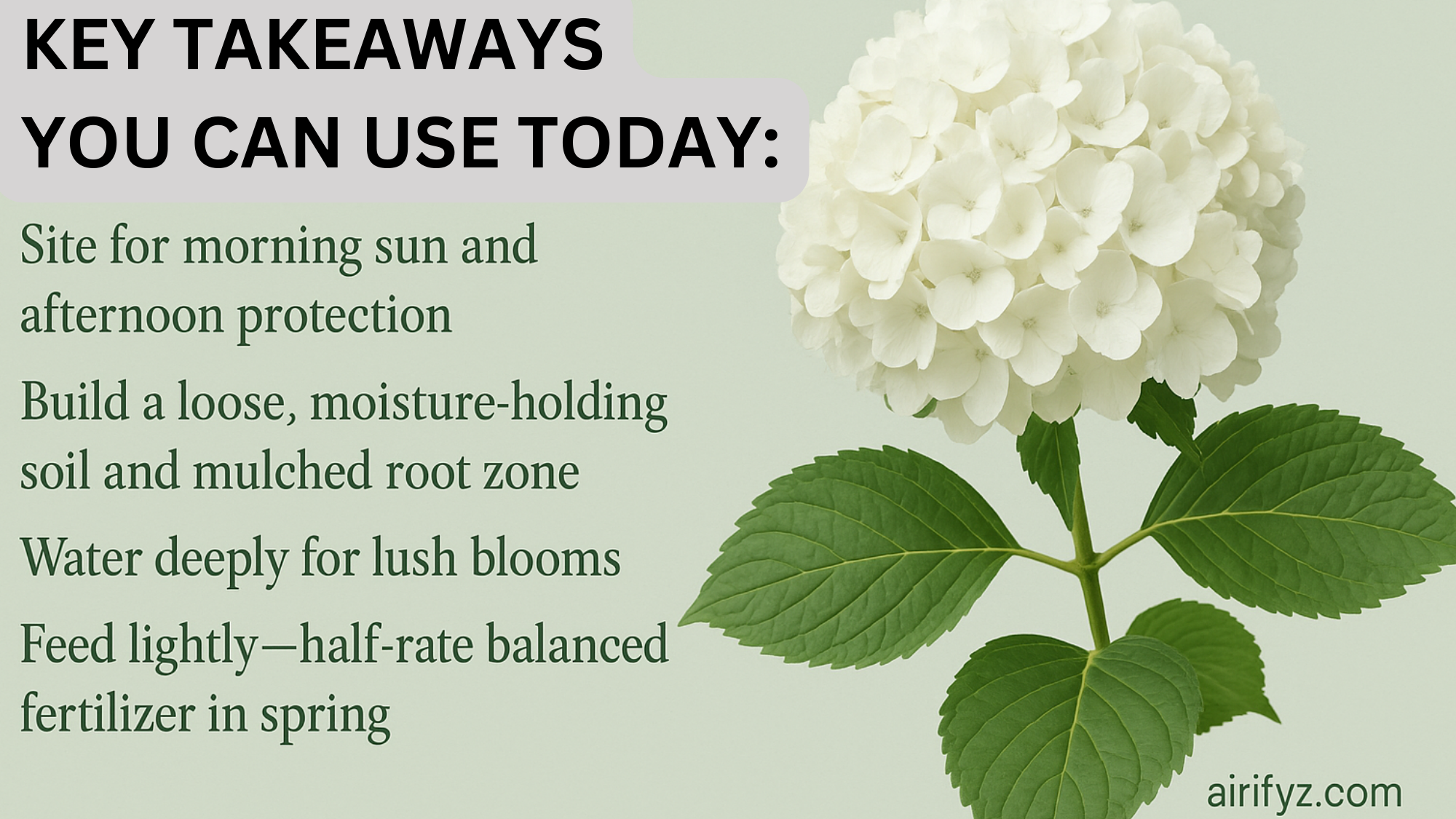
Key Takeaways You Can Use Today
-
Site for morning sun and afternoon protection
-
Build a loose, moisture-holding soil and mulched root zone
-
Water deeply to a weekly total of ~2.5–3.5 cm, adjust for heat
-
Feed lightly– use half the recommended amount of balanced fertilizer in spring, then stop feeding by midsummer.
-
Prune right after the first flush, then only dead wood in winter
-
Use microclimate tweaks—shade cloth, wind breaks, light-colored containers
-
Follow the seasonal calendar so you never miss the best window
Nail these seven habits and your Wedding Gown Hydrangea won’t just look elegant—it will bloom like it means it.
You can also read about: Best Strawberries and Cream Hydrangea Care Tips for Huge Blooms
FAQ about Wedding Gown Hydrangea
1) How big does Wedding Gown Hydrangea get?
Typically compact—about 0.9–1.2 m tall and wide with good care and periodic renewal pruning. Ideal for small beds and containers.
2) Does Wedding Gown Hydrangea change color with soil pH?
It’s primarily white; pH shifts don’t create blue the way pink/blue cultivars do. Petals may blush slightly as blooms age or in strong sun.
3) When should I prune Wedding Gown Hydrangea?
Right after the first bloom flush, then only dead/damaged wood in late winter. Avoid hard late-winter cuts that remove next season’s buds.
4) Can Wedding Gown Hydrangea thrive in containers?
Yes—use a large pot with bark-rich mix, steady moisture, and morning sun. Mulch the surface, and water deeply in heat.
5) How do I get more blooms on Wedding Gown Hydrangea?
Combine morning sun, deep but infrequent watering, light balanced feeding, timely after-bloom pruning, and 5–8 cm mulch to keep roots cool.